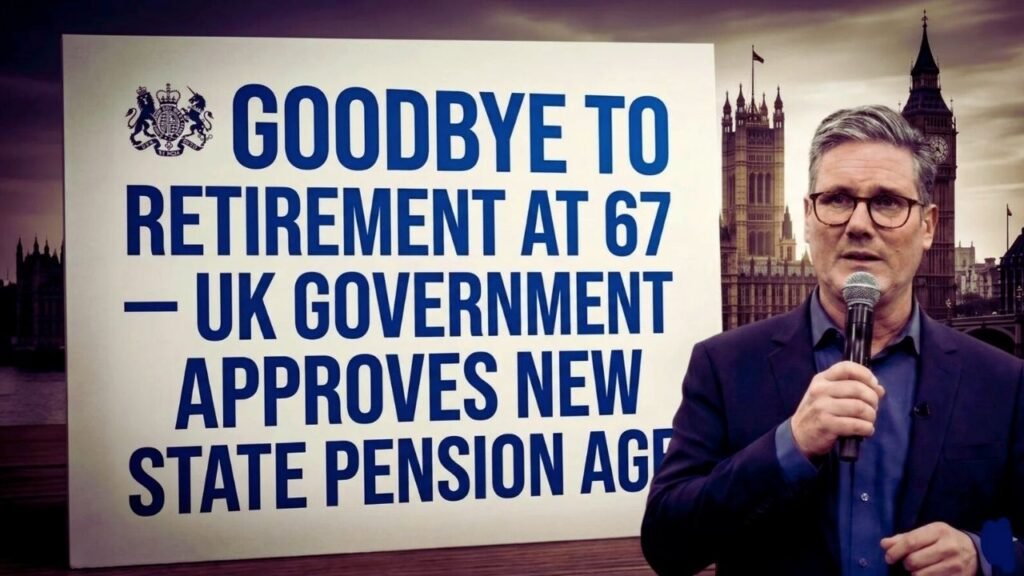
The UK’s retirement landscape has undergone a pivotal shift today as the government officially confirmed the legislative path for the next generation of pensioners. These approved measures solidify the transition away from the current age of 66, setting a definitive timeline for millions of workers born in the 1960s.
The End of the 67 Transition Period
Today’s announcement marks the formal approval of the phased increase that will see the State Pension age rise from 66 to 67. While the concept has been on the horizon for years, the official “green light” given this March ensures that the infrastructure for this transition is now legally and administratively in place.
The change is not an overnight jump for everyone, but rather a structured rollout that begins to impact those reaching retirement age this year. The government defended the move as a necessary step to maintain the financial integrity of the National Insurance fund as life expectancy trends continue to evolve.
Who is Impacted by the 2026 Shift?
The most immediate effects of today’s confirmation will be felt by individuals born between April 1960 and March 1961. For this specific cohort, the wait for a state pension will now extend by a specified number of months beyond their 66th birthday, depending on their exact month of birth.
- Born April 6 to May 5, 1960: Eligible at 66 years and 1 month
- Born June 6 to July 5, 1960: Eligible at 66 years and 3 months
- Born October 6 to November 5, 1960: Eligible at 66 years and 7 months
- Born March 6, 1961, or later: Eligible on their 67th birthday
By the time the rollout concludes in 2028, every person in the UK will officially share 67 as their minimum qualifying age for state support. This “new normal” effectively ends the era where 66 was the standard benchmark for the British workforce.
Fiscal Sustainability and the 6% Rule
A core reason behind the government’s approval of these changes is the ongoing pressure on public finances. The Treasury aims to keep total state pension expenditure below 6% of the country’s Gross Domestic Product (GDP). As the “Baby Boomer” generation reaches retirement, raising the age threshold is the primary lever being used to meet this target.
The Department for Work and Pensions (DWP) noted that while the transition to 67 is now confirmed, the principle of providing at least ten years’ notice for any further increases—such as the eventual move to 68—remains a top priority. This is intended to give younger workers sufficient time to adjust their private savings and workplace pension contributions.
Adjusting Your Retirement Strategy
With the 67 threshold now officially set in stone, financial experts are urging workers to take a proactive approach to their retirement planning. The “cost of waiting” an extra year for state support means many will need to bridge a financial gap using personal savings or by staying in the workforce longer.
- Check your National Insurance record for any “gap years” that could reduce your payment
- Review your private or workplace pension to see if you can access funds at 55 or 57
- Consider flexible working or “phased retirement” to maintain income during the transition
The government has confirmed that its online “Check your State Pension” tool has been updated today to reflect these approved changes. This allows anyone to enter their details and see the exact day, month, and year they will become eligible for their first payment under the 2026 rules.
Looking Toward the Future
While today’s news focuses on the move to 67, the government also confirmed that the next periodic review of the State Pension age will be concluded by the end of the decade. This future review will look at whether the rise to 68 should be brought forward from its currently scheduled window in the mid-2040s.
For now, the focus remains on ensuring a smooth transition for those caught in the current 66-to-67 window. Officials have reiterated that the “Triple Lock” mechanism will remain in place, ensuring that once people do reach their new retirement age, their payments will continue to rise in line with inflation, wages, or a minimum of 2.5%.