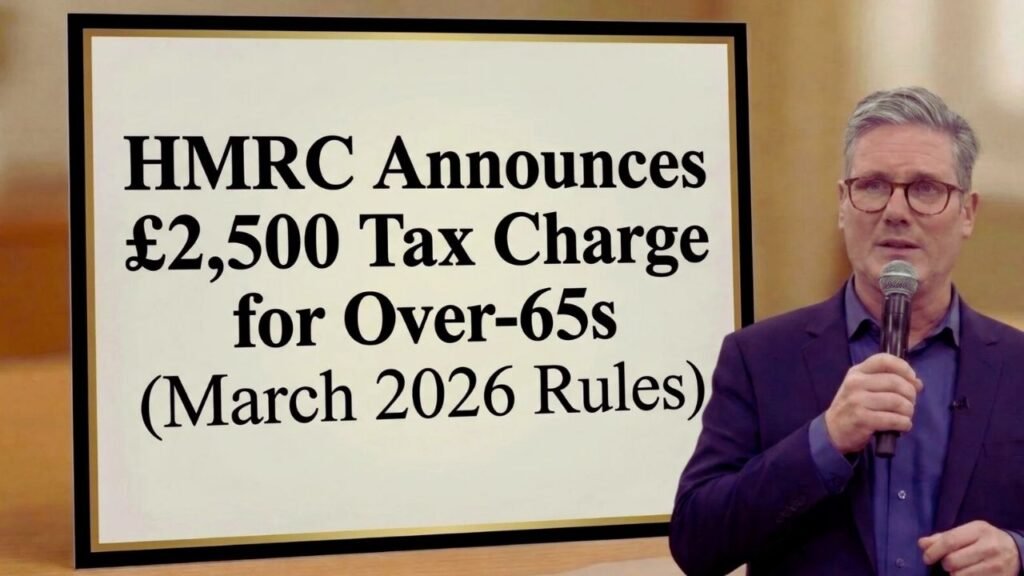
If you’re over 65 in the UK, you may have seen headlines or heard talk about a new £2,500 tax charge from HMRC starting around March 2026. This has caused worry for many retirees who depend on their pensions and savings. The good news is that HMRC isn’t sending a flat £2,500 bill to every person over 65. Instead, this figure points to the extra tax some retirees could face due to ongoing rules around frozen allowances and rising incomes.
This situation comes from what’s often called “fiscal drag” — where tax thresholds stay the same while incomes go up. Let’s break down what’s really happening in simple terms.
What the £2,500 Figure Actually Means
The £2,500 isn’t a brand-new separate tax just for over-65s. It represents the potential extra income tax bill for some pensioners because of how current rules interact.
- The personal allowance — the amount you can earn before paying income tax — remains frozen at £12,570. This freeze has been in place since 2021 and continues through 2026 and beyond.
- State pensions keep rising each year under the triple lock policy (based on inflation, earnings growth, or 2.5%, whichever is highest). In 2026, the full new State Pension is close to £12,547 annually, leaving only about £23 of tax-free allowance for other income.
That tiny leftover allowance means any extra money — from private pensions, savings interest, part-time work, or dividends — gets taxed at 20% right away. For retirees with moderate additional income, this adds up over the year and can reach hundreds or even around £2,500 in extra tax for those hit hardest.
Why This Hits Over-65s Harder Now
Many people over 65 rely on a mix of State Pension and other sources. With the personal allowance stuck, even small increases push more income into the taxable zone.
- State Pension rises help with living costs, but without a matching increase in the tax-free threshold, more of that “help” gets taxed.
- Other changes, like higher dividend tax rates starting in April 2026 (basic rate going to 10.75%), add to the pressure for those with investments outside ISAs.
- Fiscal drag pulls more pensioners into paying tax each year — estimates show hundreds of thousands more affected over time.
This isn’t targeted at all over-65s. If your total income stays below or just above £12,570, you likely won’t see much change. But for those with combined income in the £15,000–£25,000 range or higher, the cumulative effect feels like a new burden.
Who Might Face the Higher Tax Bill?
Not everyone over 65 will owe extra. It depends on your total income sources.
- Pure State Pension recipients close to the threshold may owe little or nothing yet.
- Those with private pensions, rental income, or savings interest above a few thousand pounds see the biggest jump.
- People who didn’t pay tax before but now cross into the basic rate band because of pension increases.
HMRC adjusts tax codes automatically for many on PAYE (like occupational pensions), so you might notice deductions without a separate bill. Self-assessment filers handle it through their returns.
What Can Over-65s Do About It?
You can’t change the frozen allowance, but there are steps to reduce the impact.
- Check your tax code regularly via your Personal Tax Account on GOV.UK to spot errors early.
- Use tax-free options like ISAs for savings and investments to shield interest and dividends.
- Consider pension contributions if you still work or have carry-forward allowance — this can lower taxable income.
- If married or in a civil partnership, look into Marriage Allowance to transfer part of the unused allowance.
Staying on top of your income sources and reporting helps avoid surprises.
The so-called £2,500 new tax charge for over-65s in March 2026 isn’t a direct new fee from HMRC — it’s the real-world result of frozen tax thresholds meeting rising pension payments and other income. While it creates extra costs for many retirees, understanding the rules lets you plan better and possibly soften the blow. Keep an eye on your statements, use available reliefs, and reach out to HMRC if something looks off. Staying informed makes a big difference in retirement finances.
FAQs
Is HMRC really charging every over-65 £2,500 starting March 2026?
No. This figure is an estimate of extra income tax some people may pay due to fiscal drag, not a universal new charge.
Does the personal allowance change for over-65s in 2026?
No, it stays frozen at £12,570 for everyone, including pensioners. There used to be age-related allowances, but those ended years ago.
Will my State Pension be taxed more from April 2026?
If your total income exceeds £12,570, yes — the portion above gets taxed at 20% (or higher bands if applicable). The pension rise itself isn’t “more taxed,” but less remains tax-free.
Can I avoid or reduce this extra tax?
Add up your expected annual income (State Pension + private pensions + interest + other). If it’s over £12,570, expect some tax. Use HMRC’s online calculators or check your tax code.
Can I avoid or reduce this extra tax?
Yes — maximize ISAs, check for Marriage Allowance, review pension options, and ensure correct tax coding. Always report income accurately to avoid penalties.