The long-running campaign by WASPI (Women Against State Pension Inequality) has reached another important moment as legal action continues over compensation for women affected by state pension age changes. Millions of women born in the 1950s say they were not properly informed when their pension age was increased, leaving them unprepared for retirement delays.
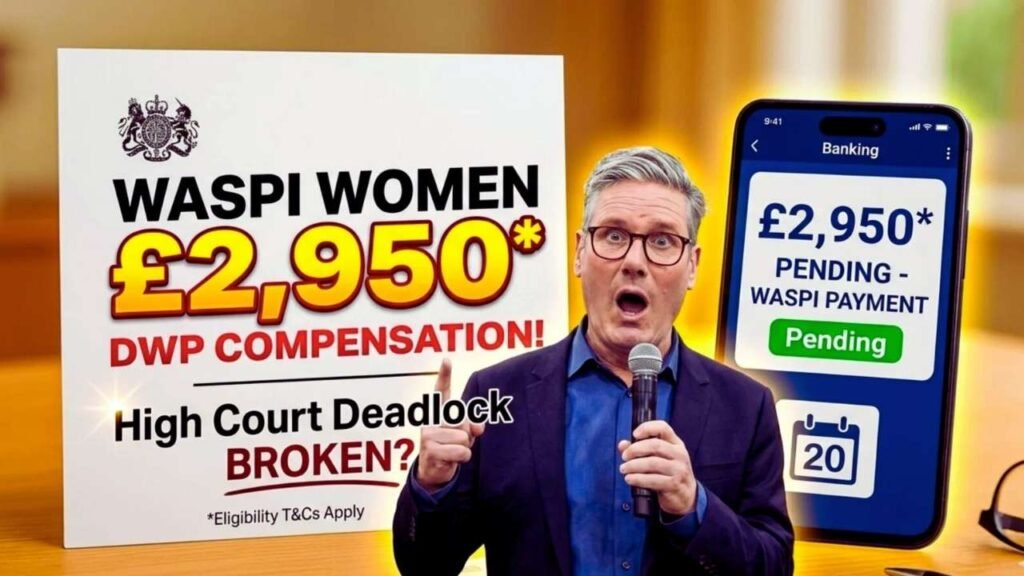
A potential High Court decision and ongoing legal pressure have revived hopes that compensation payments — possibly reaching up to £2,950 — could finally be approved after years of political disagreement.
Why the WASPI Campaign Started
The dispute began after the UK government raised the state pension age for women from 60 to match men’s retirement age. The change happened gradually between 2010 and 2020, eventually increasing the age to 66.
While equalizing pension ages was widely accepted as necessary, many women argued the changes were communicated poorly and too late.
Campaigners say the lack of proper notice left millions unable to prepare financially for working longer before receiving their pension.
Key facts behind the dispute include:
- The state pension age for women rose from 60 to 65, then later to 66
- Around 3.6 million women born in the 1950s were affected
- Some women say they received very little notice of the changes
- Many had already planned retirement around age 60
- The WASPI campaign began demanding compensation and fairness
This issue has remained one of the most debated pension disputes in the UK.
Ombudsman Recommendation for Compensation
The Parliamentary and Health Service Ombudsman investigated complaints about how the changes were communicated by the Department for Work and Pensions (DWP).
The investigation concluded there had been maladministration in the way the government communicated the pension age changes. The Ombudsman recommended that Parliament consider compensation for affected women.
The suggested compensation range was based on the Ombudsman’s scale for injustice.
Possible payments discussed include:
- Compensation levels between £1,000 and £2,950
- Payments reflecting the severity of the impact
- Support for women affected by poor communication
- Recognition of administrative failure rather than the policy itself
Campaigners often refer to the £2,950 figure as a potential upper-level payment under the Ombudsman’s compensation guidance.
Government Response and Ongoing Dispute
Despite the Ombudsman’s findings, the UK government has repeatedly rejected calls to introduce a compensation scheme.
Ministers have acknowledged delays in sending letters informing women about pension age changes but argued that most women were already aware of the policy.
The government also said compensation for all affected women could cost up to £10 billion, making it difficult to implement fairly.
As a result, ministers decided not to introduce a nationwide compensation program.
Campaigners strongly disagree with that decision and continue to challenge it through political and legal routes.
The Role of the High Court Challenge
The WASPI campaign has taken legal steps to challenge the government’s refusal to introduce compensation.
Lawyers for the group have asked the High Court to review whether the government’s decision was rational and properly considered the Ombudsman’s recommendations.
If the court finds the decision flawed, ministers could be required to reconsider the issue again.
The court cannot directly order compensation payments, but it could force the government to revisit the decision and provide a fresh response.
This legal route is seen as one of the final opportunities to break the long political stalemate.
Possible Outcomes if Compensation Is Approved
Although no compensation scheme has been confirmed yet, analysts have discussed several possible scenarios if the government eventually agrees to payments.
Potential outcomes may include:
- A flat payment to all eligible women
- A tiered system based on financial hardship
- Maximum compensation around £2,950
- Payments focused on communication failures rather than pension loss
Campaign groups have said they prefer a simple system that avoids complicated eligibility tests.
What Women Affected by the Case Should Do
For now, there is no official compensation application system open.
However, women affected by the pension age changes are being encouraged to stay informed and keep relevant records.
Helpful steps include:
- Checking your state pension age history
- Keeping old letters or documents from the DWP
- Following updates from the WASPI campaign
- Contacting local MPs about the issue
- Monitoring official government announcements
Campaigners say political pressure and legal action will continue until the matter is fully resolved.
The WASPI compensation dispute remains one of the longest-running pension controversies in the UK. Millions of women say they suffered financial hardship after the state pension age increased with little warning.
Although the government has repeatedly rejected compensation, the ongoing High Court challenge has reopened the debate and could force ministers to reconsider their position. With potential payments of up to £2,950 being discussed, many affected women are watching closely to see whether this legal battle will finally bring a resolution.
FAQs
Who are the WASPI women?
WASPI refers to women born in the 1950s who were affected by increases to the UK state pension age.
Why are they seeking compensation?
They argue the government failed to properly inform them about pension age changes, leaving them unable to prepare financially.
Has the government approved compensation yet?
The Ombudsman suggested payments between £1,000 and £2,950 depending on the level of impact.
Has the government approved compensation yet?
No. The government has so far rejected a compensation scheme despite ongoing legal challenges.
How many women are affected by the dispute?
Around 3.6 million women born in the 1950s could be impacted by the pension age changes.